
Running a Sex Offender Check in DeSoto County
The official starting point is the Florida Sexual Offenders and Predators Search. It can return a countywide list without a person's name, a useful method for neighborhood awareness. Select DeSoto in the county field, or use the address and map mode when proximity matters. FDLE also maintains wanted-person tools and downloadable public data. The DeSoto County Sheriff's Office is the local contact for registration and suspected address noncompliance, not a separate public risk-ranking service.
A result should be read as a current registry entry. It does not establish a person's whole Florida criminal history, predict future conduct, or replace the conviction file. FDLE warns that positive identity may require fingerprints. Compare the photograph and physical details, then use the conviction county link when the underlying case outcome matters.
The official registry landing screen is shown in the FDLE source.
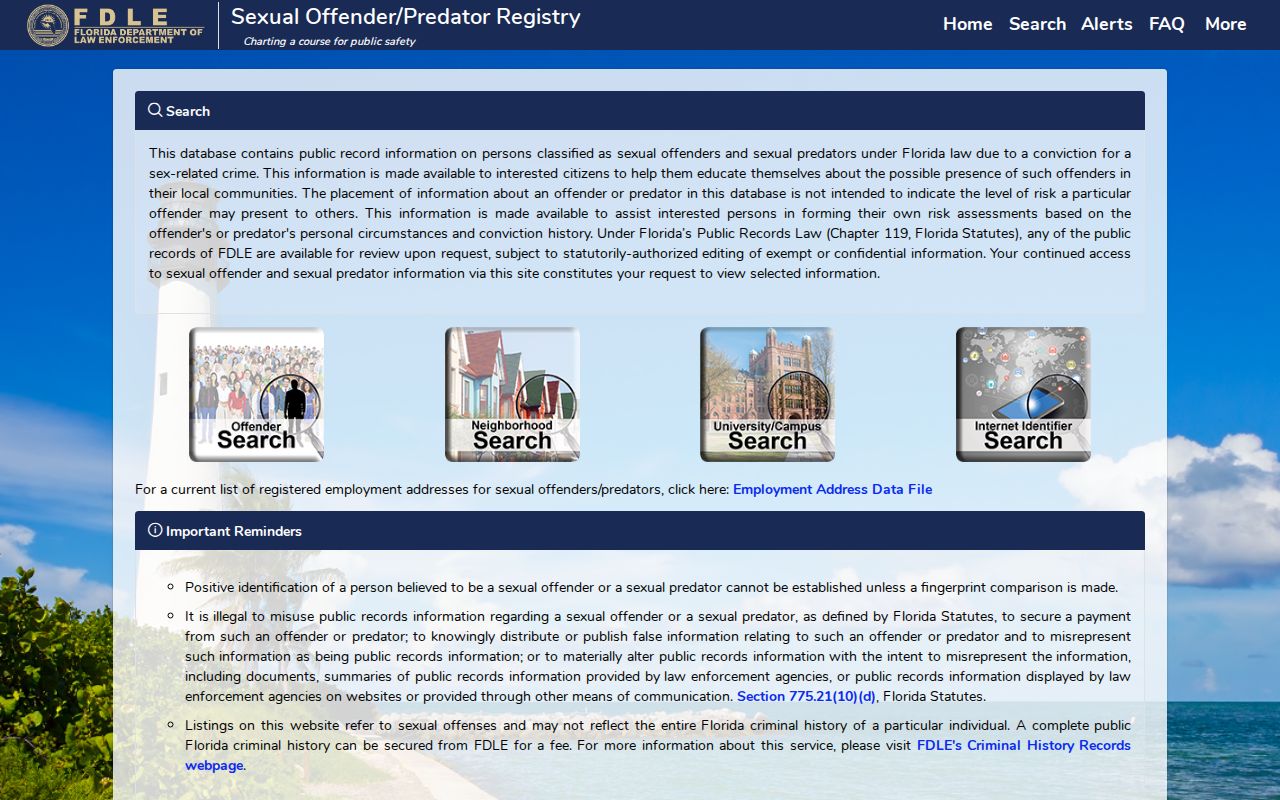
That state page, rather than an unofficial people-search service, controls the public Florida listing.
Search FDLE by DeSoto County
A geographic search works even when no name is known. FDLE requires at least one of five alternatives: first name, last name, city, county, or ZIP. Partial names are accepted. Leaving both name boxes blank and choosing DeSoto County produces the broad local list available at that moment. An address search is better for a specific home, school route, or family destination because it uses the registry's map and radius functions.
Search terms affect the result set. “Arcadia” can describe a mailing city beyond a tight municipal boundary, while the county filter follows FDLE's county coding. Review each profile instead of assuming every returned address lies within Arcadia city limits. For a cross-state question, use the national source described below.
Searching the Florida Registry
The search is public and does not require payment. Begin with the least amount of reliable information, then narrow the results. The official workflow protects against excluding a correct record because a full name was spelled differently.
- Open FDLE's search and read its conditions of use.
- Enter a partial or full name, or choose DeSoto County for a geographic list.
- Review photographs, aliases, physical descriptors, addresses, and status to distinguish possible matches.
- Open the full profile and follow its conviction link when the court record is needed.
The FDLE search form shows the live controls used for a DeSoto County registry search.
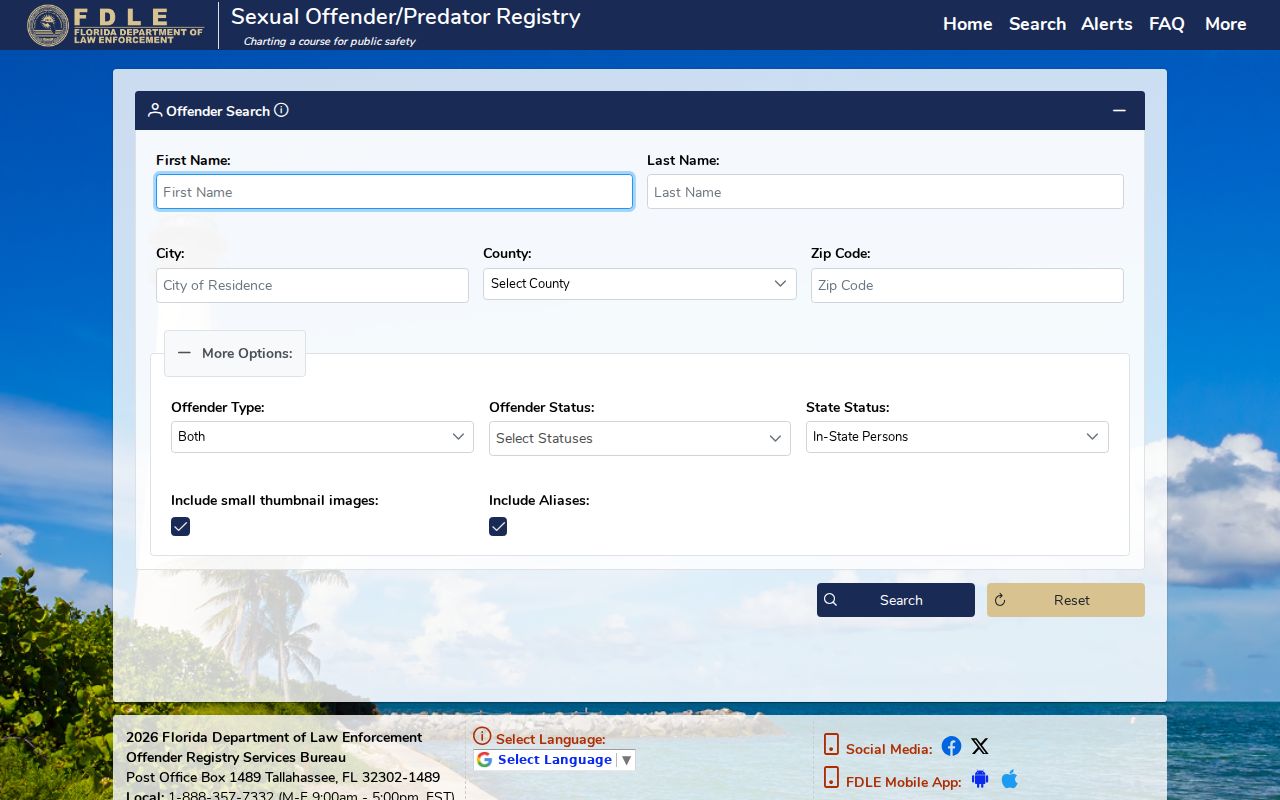
These fields allow both person-based and place-based searches without adding private data to an unofficial portal.
| Field | Type | Required | Use |
|---|---|---|---|
| First Name | Text | One of five | Full or partial name |
| Last Name | Text | One of five | Full or partial surname |
| City | Text | One of five | Geographic list |
| County | Dropdown | One of five | Select DeSoto |
| ZIP | Text | One of five | Florida ZIP search |
| Address / radius | Map mode | Alternative | Proximity search |
FDLE, NSOPW, and DeSoto Registration
Three official layers answer different questions. FDLE controls Florida's public registry and provides the detailed state profile. The DeSoto County Sheriff's registration function receives required local updates and is the right office for a suspected DeSoto address problem. The U.S. Department of Justice's National Sex Offender Public Website, or NSOPW, searches participating jurisdictions when the concern crosses state lines.
The National Sex Offender Public Website supplies that cross-state layer.
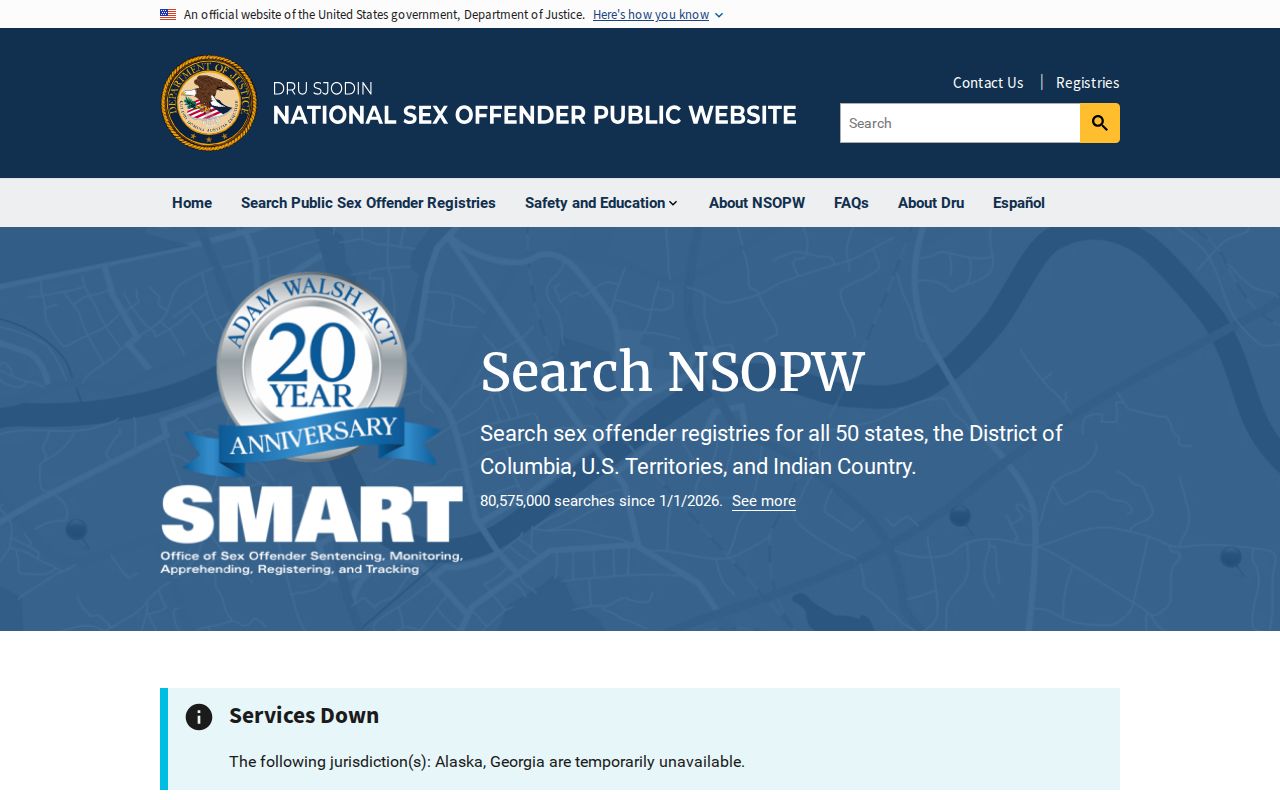
For a Florida-only result, return to FDLE for the fuller state record and current Florida status.
What a DeSoto Registry Profile Shows
A public profile groups identity, location, classification, and qualifying-offense data. It may show more than one address type or registered location. Vehicle or vessel details can appear when reportable. The conviction section identifies the statute, jurisdiction, and date, while the linked clerk route helps locate the original case. Sensitive values and unrelated case history are not implied merely because they are absent.
| Name and Aliases | Registered name and reported alternate names |
|---|---|
| Photo and Description | Photograph, age or birth data, race, sex, height, weight, hair, eyes, and marks |
| Registered Locations | Residential address, address type or status, transient and other locations when applicable |
| Offense | Qualifying offense, statute, jurisdiction, conviction date, and legally displayed victim category |
| Classification | Florida sexual offender or sexual predator designation |
| Status | Registration information, compliance or wanted information as reported |
A profile is best used as an index to official sources. The court file supplies pleadings and disposition details, while the registry explains why public registration applies.
Registry Profiles Are Not Full Histories
Florida's registry is status based. A criminal-history record, by contrast, can contain many fingerprint-supported arrest cycles and reported dispositions. The registry displays the qualifying matter and registration data, not every arrest or every court case. It also does not turn the words “offender” and “predator” into a low, medium, or high prediction of risk.
If the conviction detail seems unclear, follow the profile's conviction-county information to the relevant clerk. DeSoto filings can be reviewed through the county clerk when the case arose here. That comparison prevents a listed registry status from being mistaken for an entire life history.
Registration Requirements and Levels in Florida
Florida uses statutory classifications, not the federal SORNA tier labels as its public scale. Registration is generally for life unless a specific removal process applies. A sexual-predator designation brings enhanced notification and verification duties. Juvenile categories depend on separate adjudication and statutory rules, so adult rules should not be applied to every juvenile matter.
| Florida Label | Basis | Visibility and Duration |
|---|---|---|
| Sexual offender | Section 943.0435 or another registration law | Public listing, generally lifetime unless statutory removal applies |
| Sexual predator | Court or statutory designation under section 775.21 | Public listing with enhanced duties, generally lifetime |
| Juvenile category | Specific adjudication and registration statute | Public treatment depends on the governing law |
Key authorities also include sections 944.606, 944.607, and 985.4815. Registrants report through the sheriff's function and update required identifiers and locations on statutory schedules.
Florida Registry Answers and Limits
FDLE's official answers address searches, classifications, public data, and continued listing after a person leaves Florida. They also explain a practical output limit: PDF printing stops at 25 selected records, while county or statewide CSV data supports larger official datasets. A small PDF limit is not a cap on search results.
The FDLE registry information source records these statewide rules.
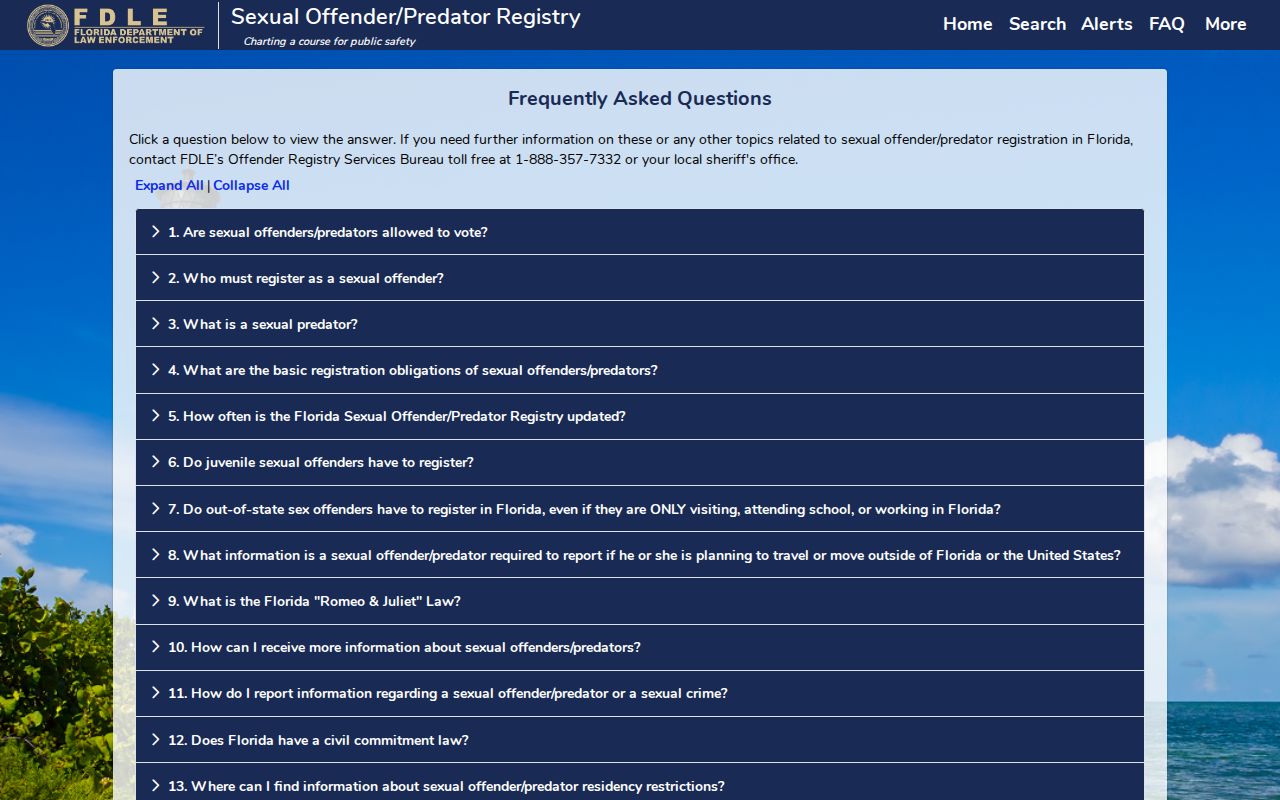
Use those official explanations when a DeSoto County result seems to conflict with assumptions about risk tiers, removal, or printing.
Report a DeSoto Address Problem
Do not confront a person when a listed address appears stale. First refresh the profile and note the name, address, status, and time viewed. Then report suspected noncompliance to local law enforcement. The DeSoto County Sheriff's Office is at 208 E. Cypress Street, Arcadia, FL 34266, and its main number is (863) 993-4700. FDLE Offender Registry Services can be reached at 1-888-357-7332 on weekdays or sexpred@fdle.state.fl.us.
Give the office facts, not guesses. Registry staff and law enforcement can check information that is not available to the public. An old address can reflect a reporting delay, a location-status detail, or noncompliance; the public profile alone cannot prove which explanation is correct.
Lawful Use and Community Notification
Registry information supports awareness, safety planning, and official community notification. Readers should verify current details and treat the record as a public status entry. It may not be used as a license to threaten, intimidate, harass, or facilitate harm. Florida's registry states that using predator information to facilitate a crime is illegal.
Use registry data lawfully: Florida law and the FDLE warning prohibit using registry information to facilitate a crime; never threaten, harass, or intimidate a registrant or household.
For an emergency, contact law enforcement. For a possible address violation, use the sheriff or FDLE reporting channels. For a court-case question, consult the originating clerk rather than drawing conclusions from the registry alone.