
Criminal Cases in DeSoto County Courts
DeSoto County belongs to Florida's Twelfth Judicial Circuit. Circuit Court hears felony prosecutions and related post-judgment matters. County Court hears misdemeanors and criminal traffic cases. The DeSoto Clerk of Circuit Court and County Comptroller keeps both files at the same Arcadia counter. Deputy clerks can give a court date or current case status, but they cannot advise a person how to plead or what motion to file.
A criminal court file is distinct from the Sheriff's arrest record. Law enforcement may arrest at the scene, use a warrant based on a sworn complaint, or send an intake to the State Attorney. The prosecutor then decides whether and what to file. A booking charge can therefore change before the Clerk opens the DeSoto County criminal case. The filed information, docket, judgment, and sentence are the records that establish the court outcome.
Two DeSoto Criminal Court Divisions
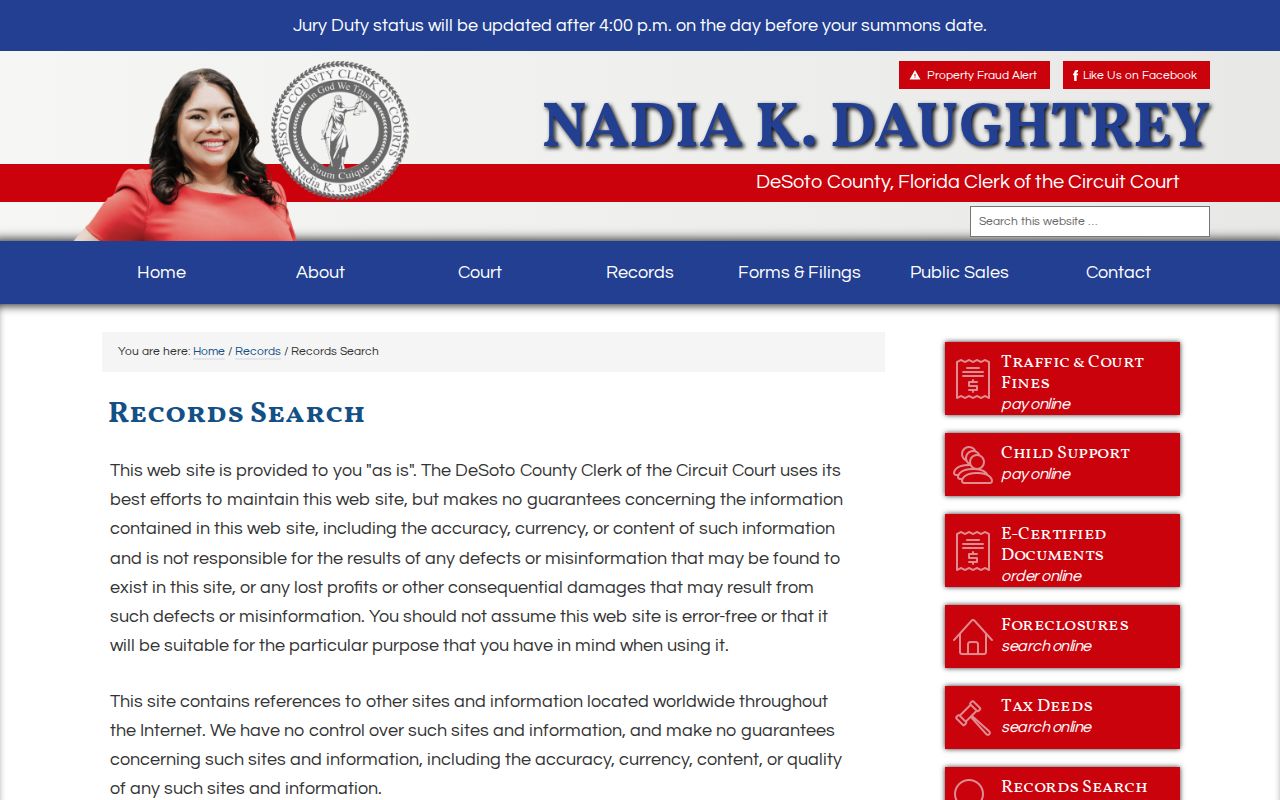
The Clerk separates felony work from county criminal and criminal traffic work. The DeSoto felony division receives felony cases, tracks court dates, and records final dispositions. Its official page is shown below.
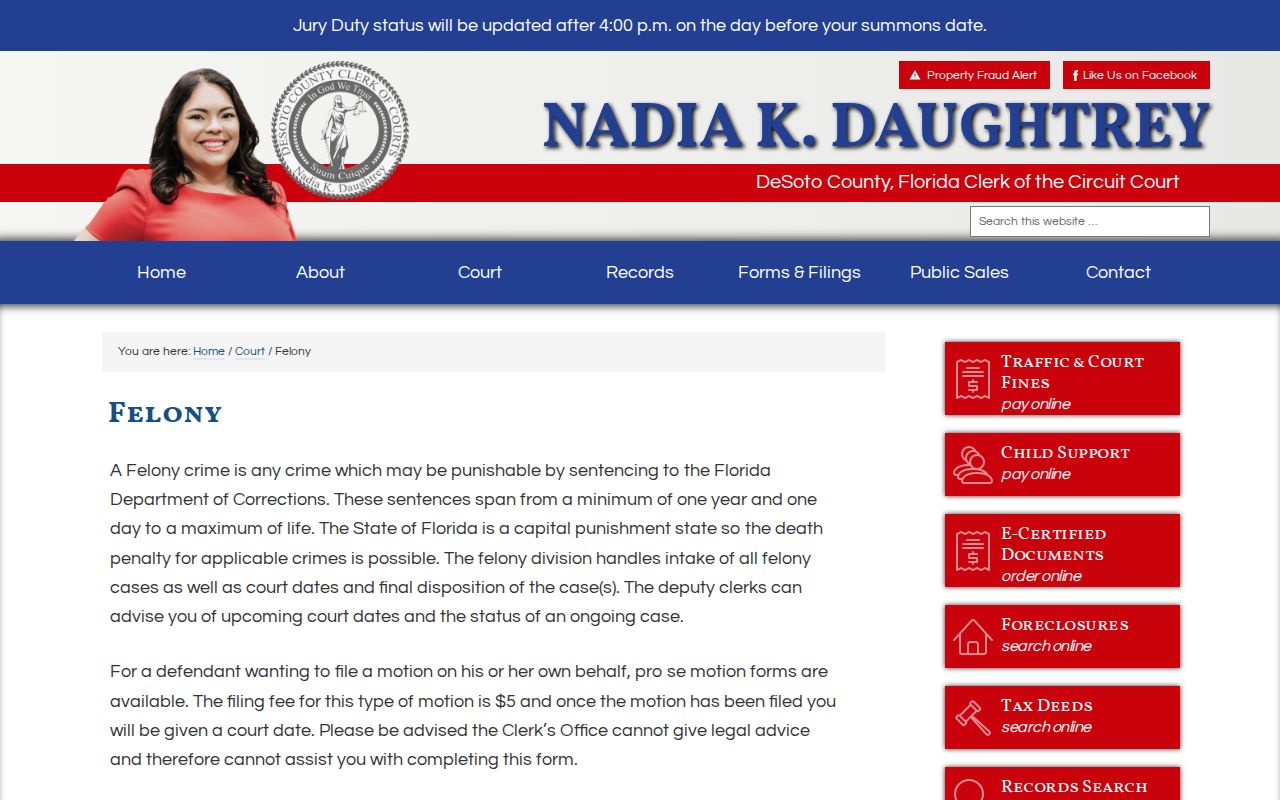
The division label matters when requesting a file. A felony belongs in Circuit Court; a misdemeanor or criminal traffic prosecution belongs in County Court.
The misdemeanor and criminal traffic division handles the lower-level criminal docket at the same office.
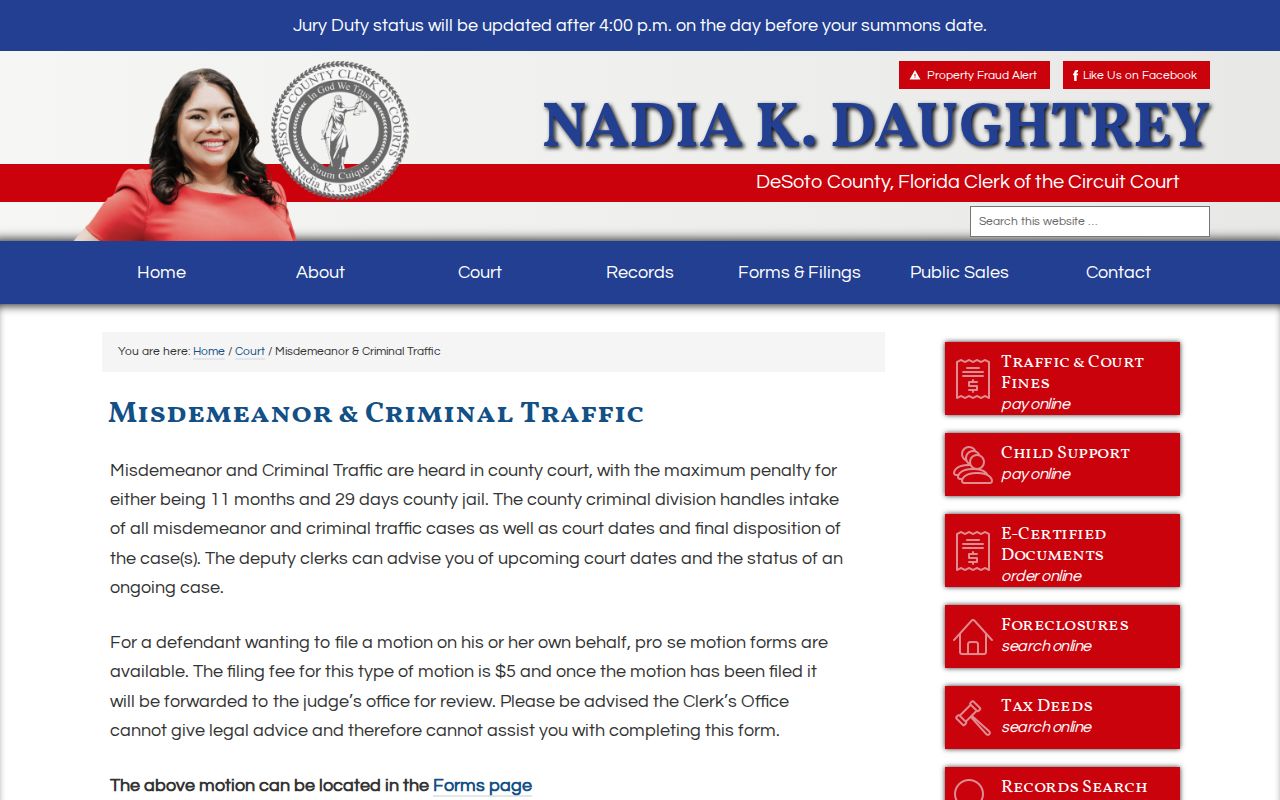
This shared custodian lets a requester use one Clerk contact while still naming the right division, case type, and year.
How to Search Case Records
Start with the DeSoto Clerk records search. A uniform case number is the best key because it points to one file. A party-name search is useful when the number is unknown, but names can produce several possible cases. Confirm the division, filing date, and case status before treating a result as the intended DeSoto County criminal court case.
- Open the Clerk's Official Records and Court Records Search and choose the court-record option.
- Search by uniform case number when available, or enter the party's first and last name.
- Narrow broad results with the division, year, date range, or case type shown by the interface.
- Open the docket and read each event in sequence. A filing entry is not a ruling.
- Contact Clerk Records for a missing image, plain copy, certified copy, or name-and-year search.
| Search field | Use | Reading tip |
|---|---|---|
| Uniform case number | Direct file lookup | Best way to avoid a same-name match |
| Party name | Find an unknown case number | Check division and filing date |
| Division or case type | Separate felony, misdemeanor, and traffic | Match the charge level |
| Year or date range | Reduce a long result list | Use the filing year, not just arrest year |
| Status | See whether the matter is open or disposed | Disposed does not mean convicted |
Missing DeSoto Court Documents
The online result may show a docket line without a public document image. That can reflect a scanning limit, a confidential filing, a sealed case, or a record that requires Clerk review. Give the full case number to Clerk Records and ask whether the image is public. State whether a plain or certified copy is needed. Certification is the Clerk's formal assurance that the copy matches the court record.
The counter is at 115 E. Oak St., Room 101, Arcadia, FL 34266. Call (863) 993-4876 or email CustomerService@DesotoClerk.com. Public hours are Monday through Friday, 8:30 a.m. to 4:30 p.m., with a noon to 1 p.m. closure. The verified schedule is $1 per copy page, $2 per certified document, and $2 for each year and name searched. Ask for an estimate before ordering a large file.
DeSoto Clerk Criminal Records
115 E. Oak St., Room 101
Arcadia, FL 34266
(863) 993-4876
CustomerService@DesotoClerk.com
Note: The Clerk is the court-file custodian, while Sheriff and county-administration records must go to their own custodians.
What the Case File Shows
A DeSoto County criminal case file tracks the filed prosecution, not merely the initial arrest claim. Read the docket from filing through disposition. Document access remains subject to Florida confidentiality rules, so a public view may omit protected data or entire sealed documents.
| Uniform case number | The unique court identifier used for requests and docket searches. |
|---|---|
| Filing and division | The opening date and whether Circuit or County Court holds the matter. |
| Charge and statute | The offense filed in court, which may differ from the booking charge. |
| Docket events | Pleadings, notices, motions, orders, hearings, and other dated activity. |
| Disposition | The outcome, such as dismissal, nolle prosequi, acquittal, withhold, or conviction. |
| Sentence and finance | Custody, supervision, costs, and balances recorded after judgment. |
| Document links | Public images when available; confidential or sealed material is withheld. |
Reading DeSoto Case Outcomes
Short docket labels need context. “Disposed” says the court reached an endpoint. It does not state which endpoint. The final judgment and disposition entries show whether the prosecution ended without a conviction, resulted in a withhold of adjudication, or produced an adjudication of guilt.
- Nolle prosequi
- The prosecutor discontinued the filed charge.
- Dismissed
- The case or charge was terminated by court action.
- Adjudication withheld
- The court withheld a formal adjudication of guilt; it is still a court outcome.
- Acquittal
- A not-guilty result after the issue was decided.
- Conviction
- An adjudication of guilt based on a plea or verdict.
Never flatten these results into one “guilty” label. For a questionable Florida repository entry, compare the DeSoto case file with the FDLE record and use FDLE's review and challenge process.
Stages of a Criminal Case
A local prosecution can begin after an arrest, warrant, notice to appear, or State Attorney intake. A person held without a posted bond receives first appearance within 24 hours. Arraignment records a guilty, not-guilty, or no-contest plea. Discovery, depositions, motions, and continuances then shape the pretrial docket.
Case flow: Charges Filed → Arraignment → Pretrial → Plea or Trial → Disposition → Sentencing.
An appeal adds a new layer. The trial file remains with the DeSoto Clerk, while an appellate docket appears in Florida's appellate system.
DeSoto Appeals Are a Separate Search
The Florida Appellate Case Information System, or ACIS, covers appellate courts. It is not a statewide trial-court search and cannot replace the DeSoto Clerk portal.
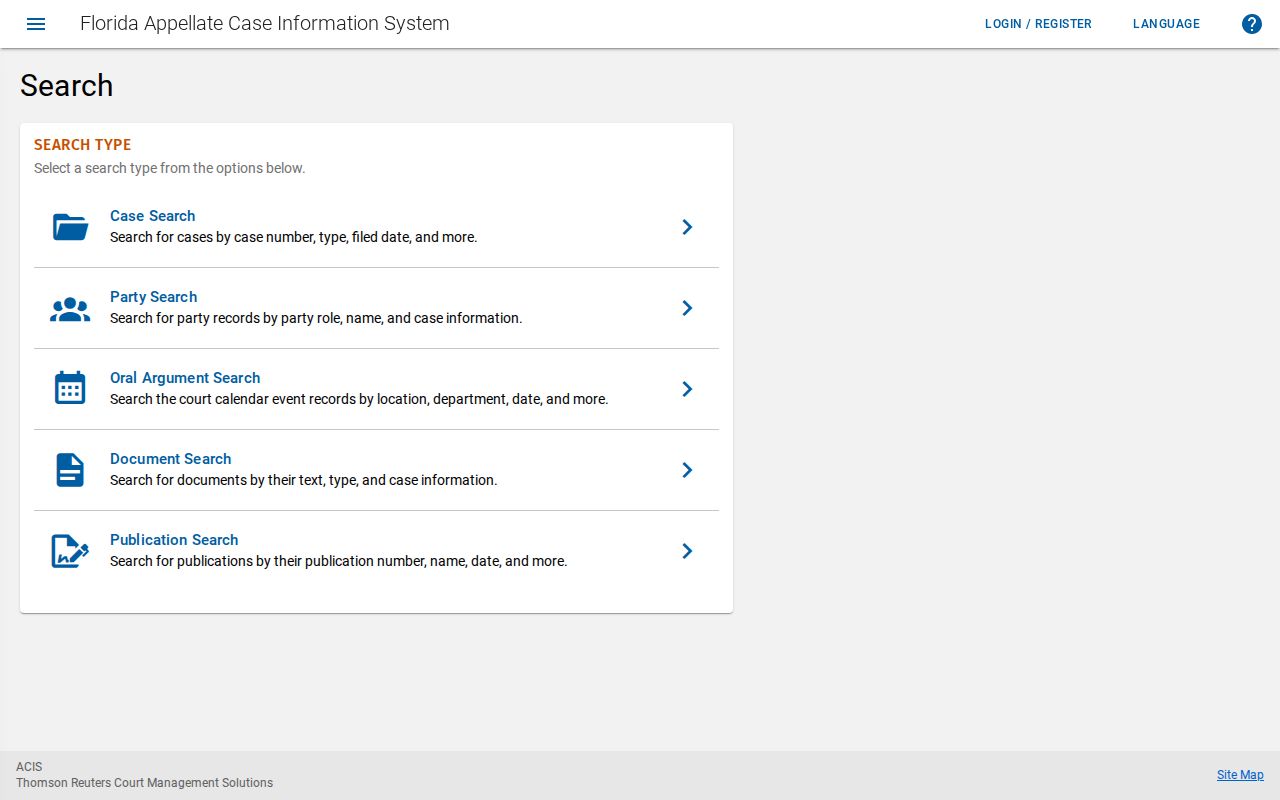
Use ACIS for a Second District Court of Appeal docket, then return to the local Clerk for the underlying Circuit or County Court file.
Access and Restrictions
Florida's constitution and public-record policy favor access, but court records are governed by both statutes and judicial rules. section 119.07 addresses inspection, copies, fees, and exemptions for agency records. Florida Rule of General Practice and Judicial Administration 2.420 controls court-record confidentiality and the process for restricted material.
Protected victim details, Social Security numbers, confidential addresses, juvenile information, active investigative material, and sealed filings may be redacted or unavailable. A custodian should release separable public portions when the law permits.
When a DeSoto court record has been sealed or expunged, the public portal may no longer display it. A dismissal alone does not seal a file. Court-ordered relief follows Florida's statutory process and an eligibility certificate does not itself create an order.
Federal Cases Beyond DeSoto Court
A federal prosecution arising in DeSoto County belongs to the U.S. District Court for the Middle District of Florida, not the county Clerk. The official PACER service supplies federal dockets and filed documents.
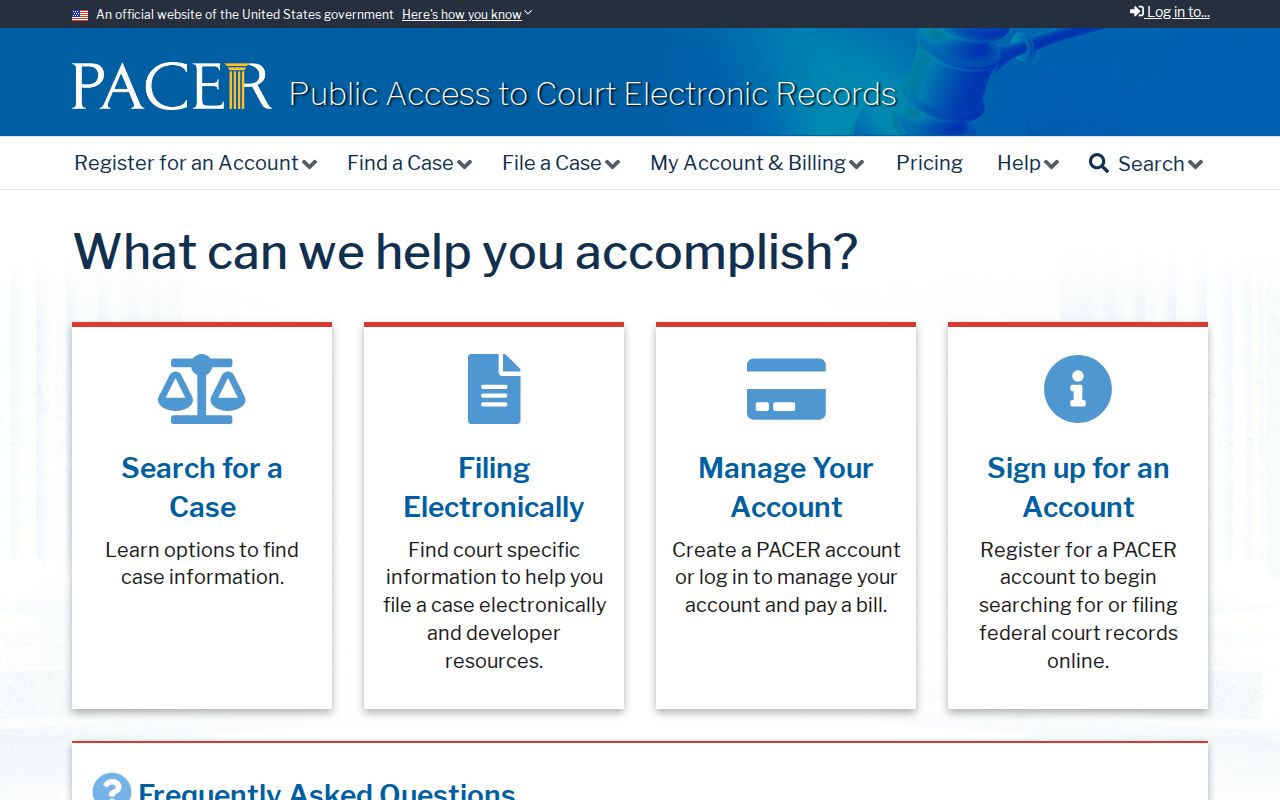
PACER is a separate federal channel. A search there will not retrieve ordinary DeSoto County felony or misdemeanor files.
For the local layer, the Clerk's court records gateway remains the starting point.
Keeping local, appellate, and federal systems separate prevents a blank result in one database from being mistaken for proof that no case exists.